
About Chanderi Fabric
Chanderi fabric is a traditional, luxurious textile known for its delicate sheen, lightweight feel, and sheer texture. It's primarily produced in the Chanderi town of Madhya Pradesh, India. Chanderi fabric is traditionally woven with a blend of silk and cotton, often incorporating golden Zari for a shimmering effect.
Key Features of Chanderi Fabric:
- Lightweight and Sheer: Chanderi fabric is known for its airy and translucent nature, making it ideal for warm weather and comfortable all-day wear.
- Delicate Sheen: The subtle shine and glossy appearance of Chanderi fabric are due to the way silk reflects light.
- Intricate Designs: Chanderi weaving techniques often incorporate intricate floral, animal, and geometric motifs, adding to its appeal.
- Variety of Styles: Chanderi fabric can be found in various styles, including pure silk, cotton, and silk-cotton blends.
Uses and Applications:
Chanderi fabric is commonly used for creating:
- Sarees: Chanderi sarees are highly prized for their lightweight, breathable fabric and intricate artistry.
- Dresses and Suits: The fabric's delicate texture and luxurious feel make it suitable for a range of clothing styles.
- Dupattas and Stoles: Chanderi fabric is often used for lightweight and versatile accessories.
Historical Significance:
Chanderi fabric has a rich history, with weaving traditions dating back centuries. It was particularly favored by royal families and queens during the Mughal era. The fabric's popularity continues to grow, making it a popular choice for both traditional and contemporary fashion.
Unique Characteristics:
- Non-Degumming: The unique feature of Chanderi fabric is the preservation of the natural silk glue (sericin) during the weaving process, which contributes to its sheen and transparency.
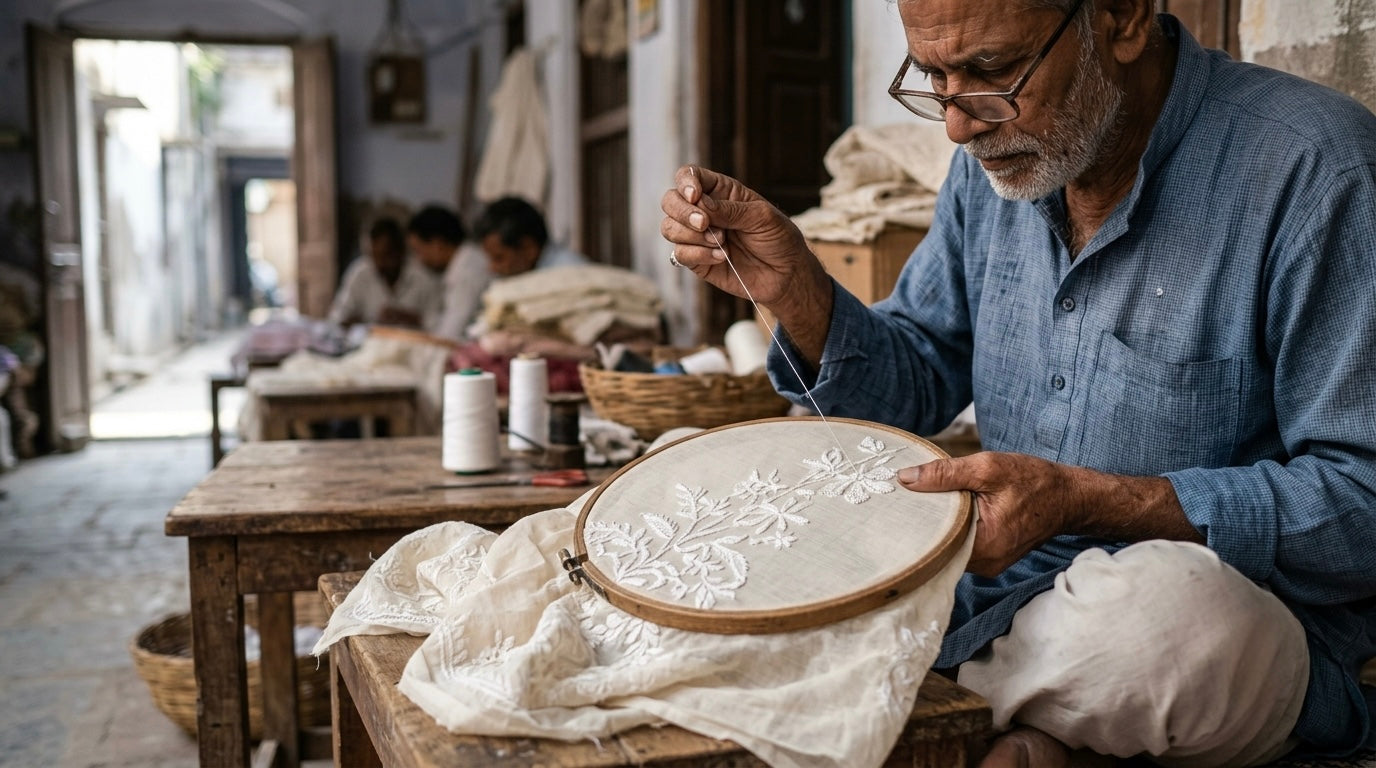
- Handwoven with Needles: Many Chanderi fabrics feature motifs that are hand-woven using needles, adding to their artistry and unique character.


Leave a comment
This site is protected by hCaptcha and the hCaptcha Privacy Policy and Terms of Service apply.